Next-Generation Food Infrastructure
The Structural Challenge Facing
Distributed Processors
Geographic concentration creates transport dependency and limits regional access
Ambient cooling systems represent major operational and environmental costs
Smaller facilities face economic barriers from conventional protocols
Large animals favor pricemaker processors. Ranchers are pricetakers with ever-lower margins.
The Prokarna Platform:
Internal Thermal Management Through Vascular Access
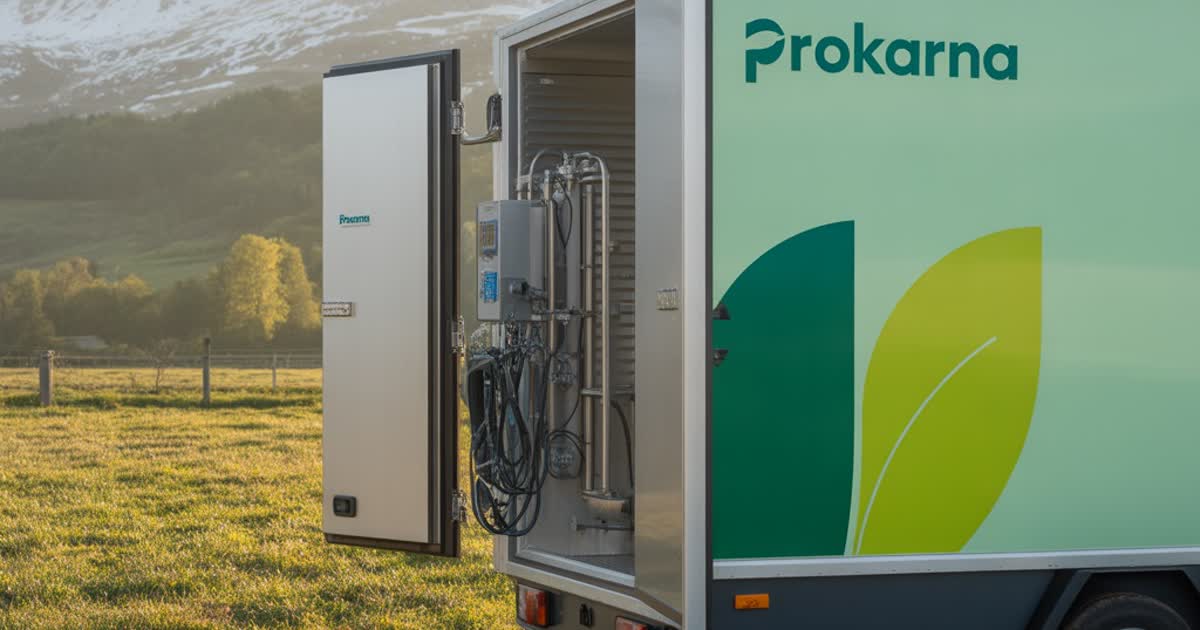
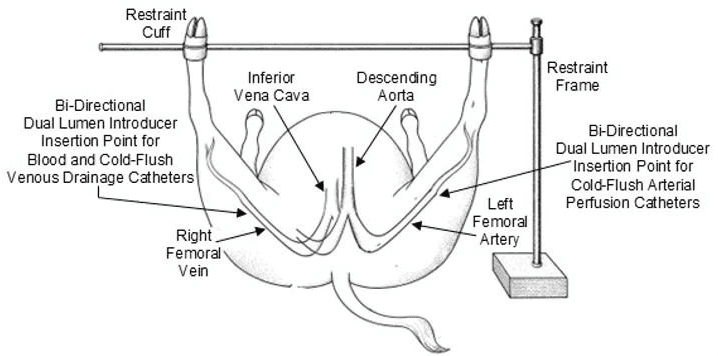
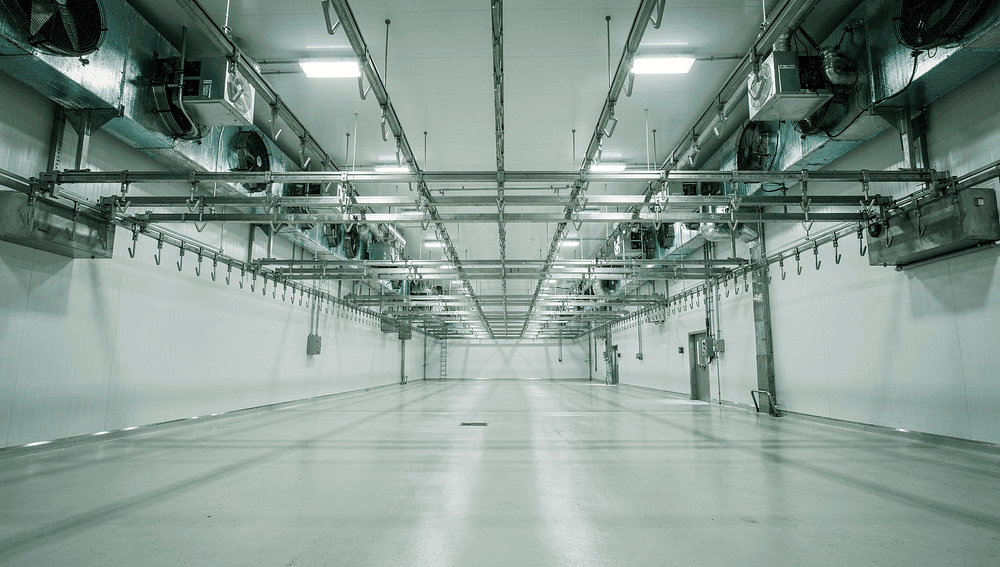
Prokarna's approach centers on accessing the carcass vascular network immediately post-harvest to establish controlled thermal stabilization from within. Rather than cooling the building to cool the carcass, our closed-loop systems are designed to directly manage internal temperature through precisely monitored fluid exchange, creating a controlled stabilization environment independent of ambient conditions.
This patent-protected platform operates as a vascular interface—creating pathways for thermal management, monitoring, and potential co-product recovery within existing USDA inspection frameworks. The system is designed for deployment in both mobile configurations and fixed-facility installations, with continuous data logging to support inspection protocols and quality documentation requirements.
Vascular Control Interface
Post-harvest access enables internal thermal biochemical management without reliance on ambient refrigeration infrastructure
Compliance Logging
Continuous data capture supports inspection protocols and audit requirements throughout pasture-finishing, stunning, and disassembly
Flexible Deployment Models
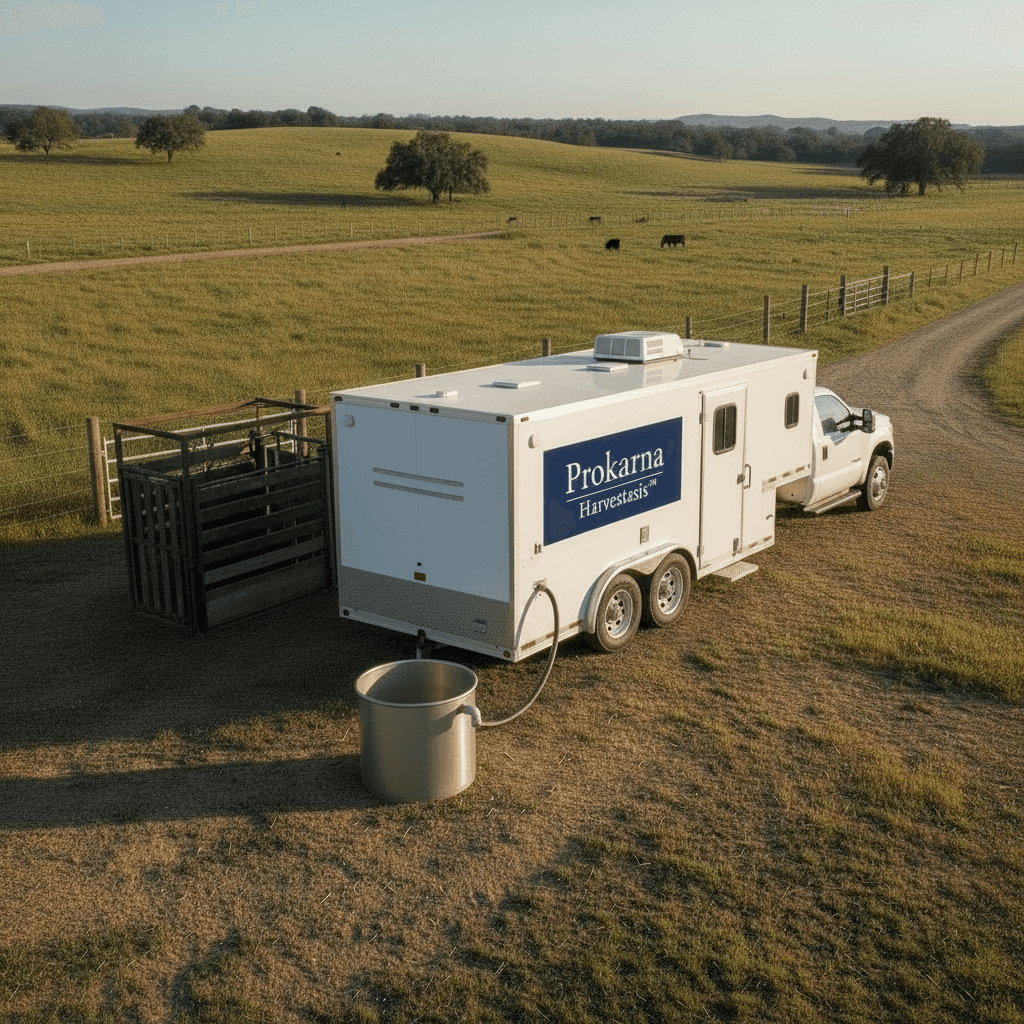
Platform designed for both singular and multiple animal Harvestsasis transport-units and facility integration across processor capacity
Stakeholder Relevance:
Who This Infrastructure Serves
Ranchers & Producers
Processors & Facilities
Regulators & Inspectors
Tribal & Sovereign Partners
Communities & Regional Economies
Platform Architecture:
Modular Systems for Distributed Deployment
Hardware Systems
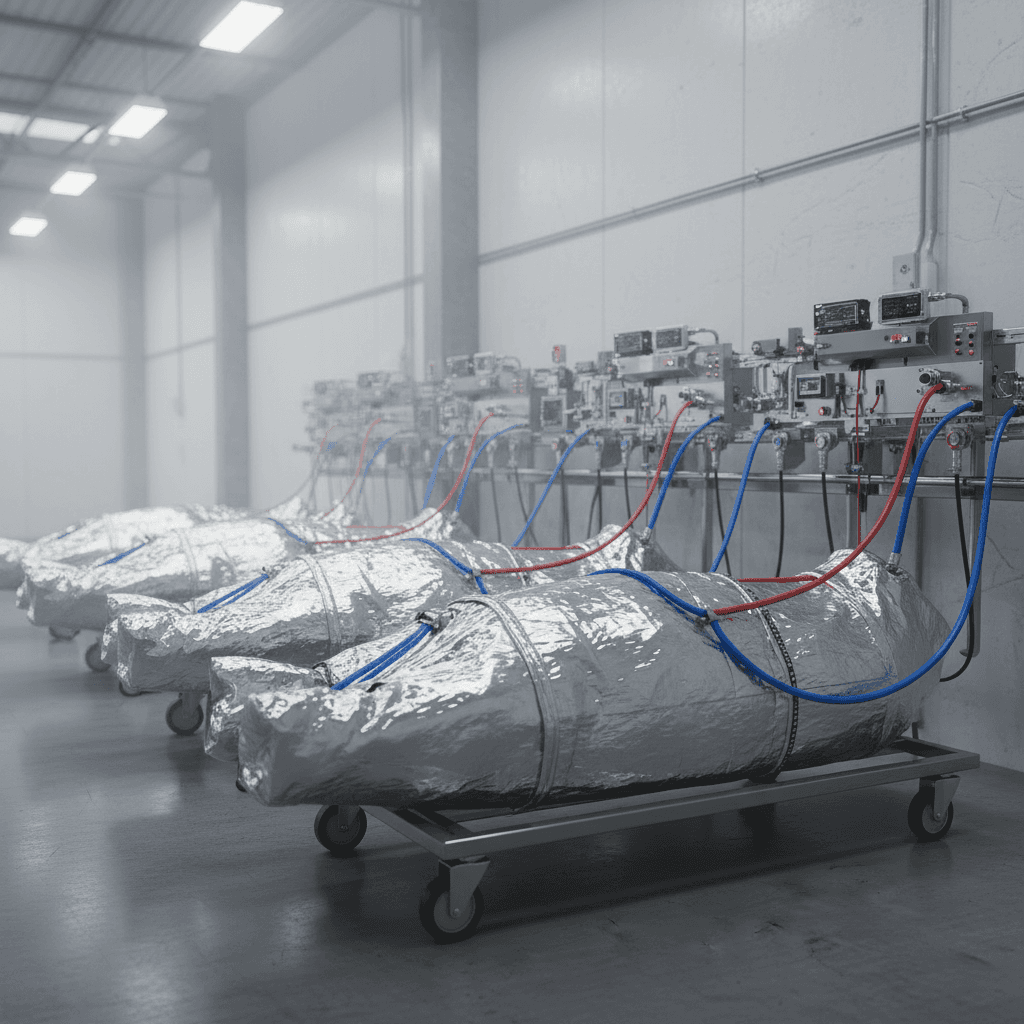
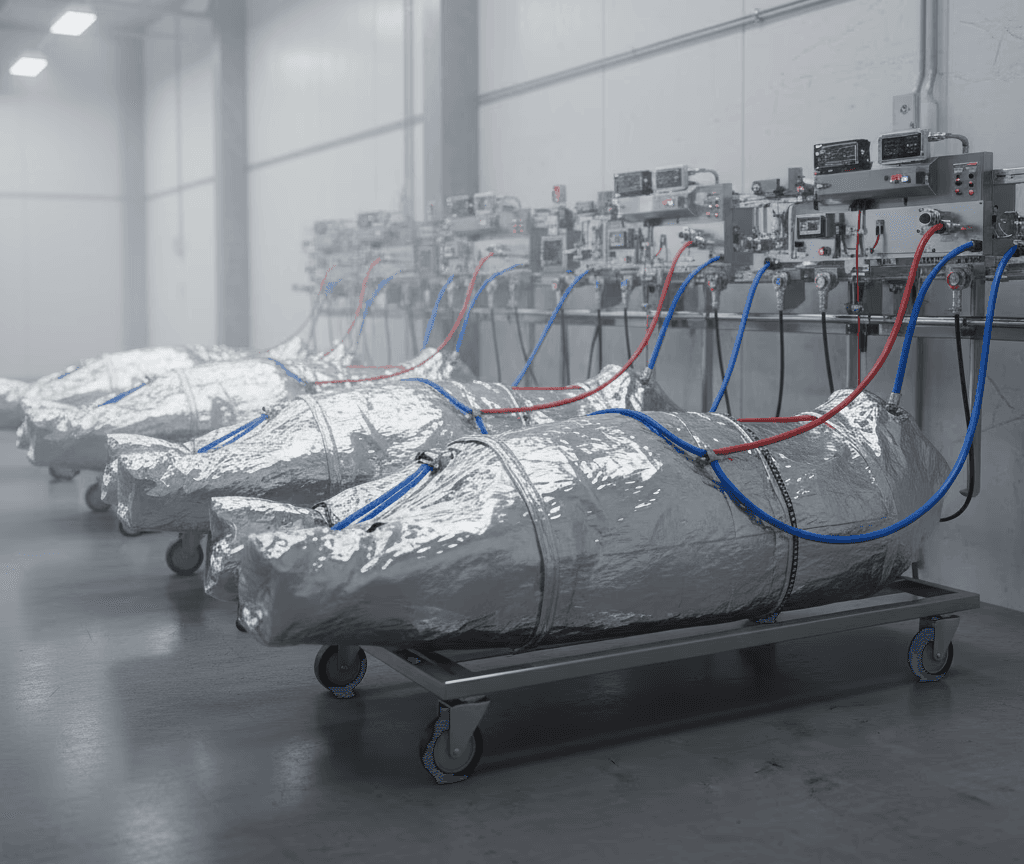
Vascular interface equipment, thermal management units, and monitoring sensors designed for sterile operation and routine inspection access. Ingesta removed at the pasture before transport
Control & Monitoring Layer
AI controlled real-time data acquisition, thermal profiling, and audit-ready logging designed to integrate with facility documentation systems
Deployment Configurations
Platform engineered for both mobile processing support units and permanent facility installations across capacity ranges
Co-Product Recovery Pathways
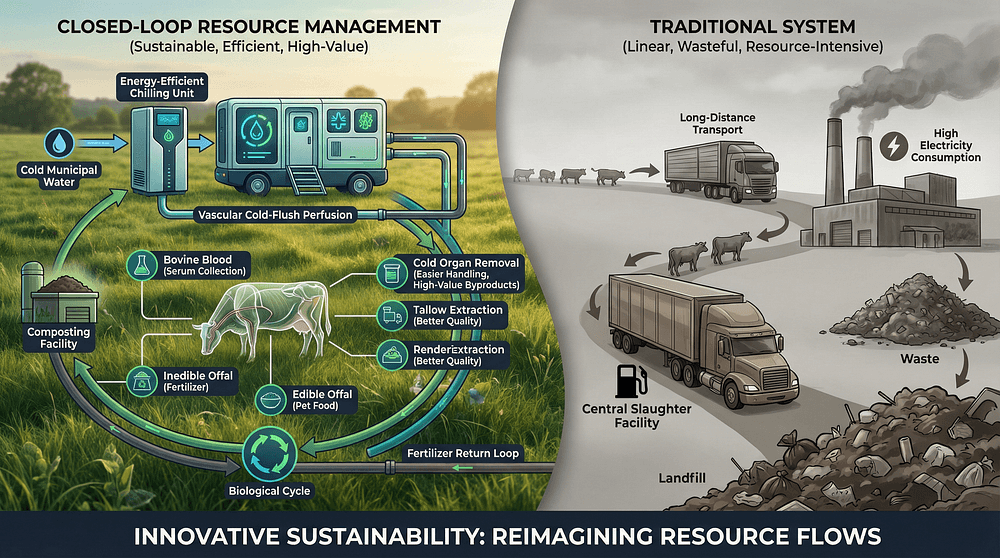
Closed-loop systems designed to enable capture and processing of valuable by-products during stabilization operations
Deployment Pathways: Pilots, Partnerships, and Regulatory Collaboration
USDA-Inspected Facility Pilots
Demonstration installations in established processing operations to validate regulatory compatibility and operational integration
Research Collaborations
Academic and institutional partnerships focused on thermal management protocols, microbiological outcomes, and energy performance documentation
Grant-Supported Demonstrations
Federal and state agricultural infrastructure grants enabling deployment in underserved regions and capacity-constrained communities
Governance, Safety, and Intellectual Property Posture
The platform architecture separates protected process knowledge from visible operational elements—enabling full regulatory access and inspection without compromising proprietary methodologies. This approach is intended to support both commercial viability and the collaborative regulatory engagement necessary for food safety infrastructure innovation.
Core Prokarna technologies are protected through comprehensive patent filings covering vascular access methods, thermal management systems, and control algorithms. This intellectual property position is designed to protect commercial interests while maintaining operational transparency required for regulatory approval and facility deployment.
Regulatory Alignment & Transparency
Prokarna's platform is designed from its pasture stun-and-load chute to the receiving dock manifold within the USDA Food Safety and Inspection Service (FSIS) frameworks. Systems feature closed, inspectable architectures with full access for regulatory personnel during all operational phases. The platform maintains continuous data logging designed to support ante mortem inspection, real-time monitoring, and retrospective audit requirements, creating documentation pathways that align with existing inspection protocols while enabling enhanced traceability.
Prokarna inventory arrives at processors' loading docks without ingesta and is then washed and exposed to UV light. Harvestasis can continue at the processor's exterior-mounted perfusion manifold for up to 48 hours. The Prokarna system integrates with established USDA-inspected facilities at the hide removal step and requires few modifications to the existing HACCP. Prokarna carcasses don't require aging, so they skip chilling and immediately proceed to fabrication. Wholesale and retail cuts are shipped in ready-to-eat form.
Equipment design prioritizes sanitation compatibility, with materials and configurations meeting or exceeding standards for food-contact surfaces in federally inspected establishments. All operational parameters remain within inspector view, with no hidden processes or inaccessible system components during stabilization operations.

Energy and Environmental Advantages
Reduced Refrigeration Load
Closed-Loop Resource Management
Transport Efficiency Pathways
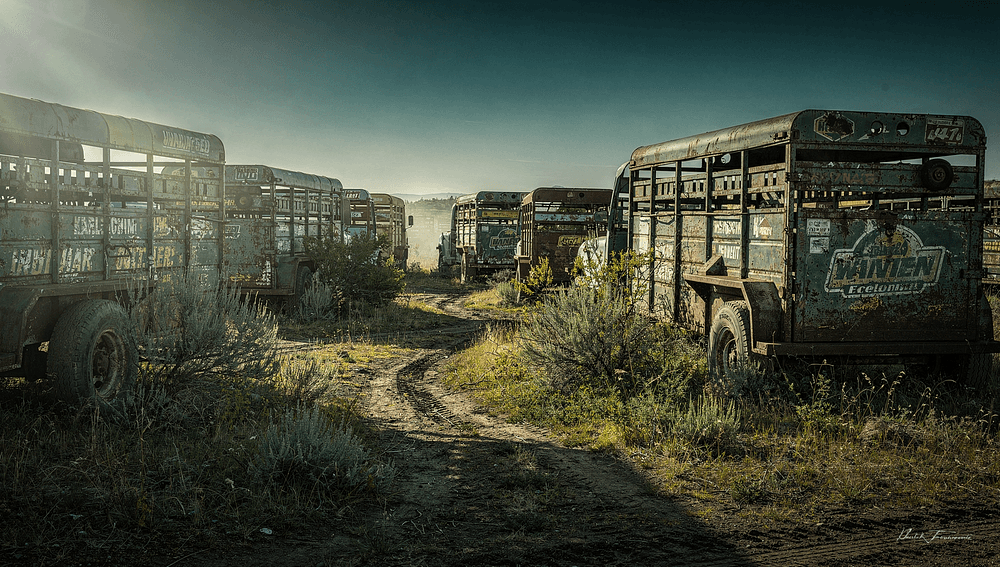
Prokarna’s Harvestasis™ ends live‑animal hauling and reduces long‑haul refrigeration by stabilizing the carcass from the inside out. Processors can eliminate live‑animal holding pens—reducing odor, insects, and land footprint. Facilities become easier to site, better neighbors, and can unlock real‑estate value to reinvest in modern equipment.
Current Status and Near-Term Objective
Q2 2026
Q4 2026
First operational data collection and regulatory review cycles
2027
Expanded demonstration program and partnership development